

What is Employee Engagement? Diagnosing Organisational Growth

Why Settle for "Marketing" a Better Workplace When You Can Build One?
Most organisations view employee engagement as a metric on a spreadsheet, a "score" to be maintained. At iFeedback, we see it differently. We view engagement as a dynamic psychological state that dictates your organisation's ability to innovate, survive crises, and outperform the competition.

What is Employee Engagement?
Employee engagement is the emotional commitment and mental investment staff have towards their organisation. It is far more than job satisfaction or a steady pay cheque; it is about passion and psychological ownership.
Through the lens of research psychology, we measure three critical dimensions that represent the healthy opposite of burnout:
Vigour: The mental resilience and enthusiasm to invest energy even when tasks become difficult.
Dedication: A profound sense of significance and challenge in one’s daily work.
Absorption: Being so happily engrossed and concentrated that time seems to disappear.
The Business Case: Why Engagement is Your Greatest Asset
Investing in engagement isn’t just a "feel-good" exercise; it is a financial and operational imperative. Engaged employees act as your most powerful brand ambassadors, directly impacting your bottom line:
Profitability: Research indicates that engaged employees outperform disengaged colleagues by 20–30%, leading to higher revenue and better customer retention (Burnett & Lisk, 2019).
Retention: Engagement creates a psychological attachment that significantly reduces staff turnover and lowers absenteeism.
Agility: In a rapidly changing market, engaged staff are more creative and willing to question the status quo to drive the organisation forward.
Resilience: During a crisis, engagement acts as a stabilising force, turning external threats into opportunities for sustained performance and loyalty.
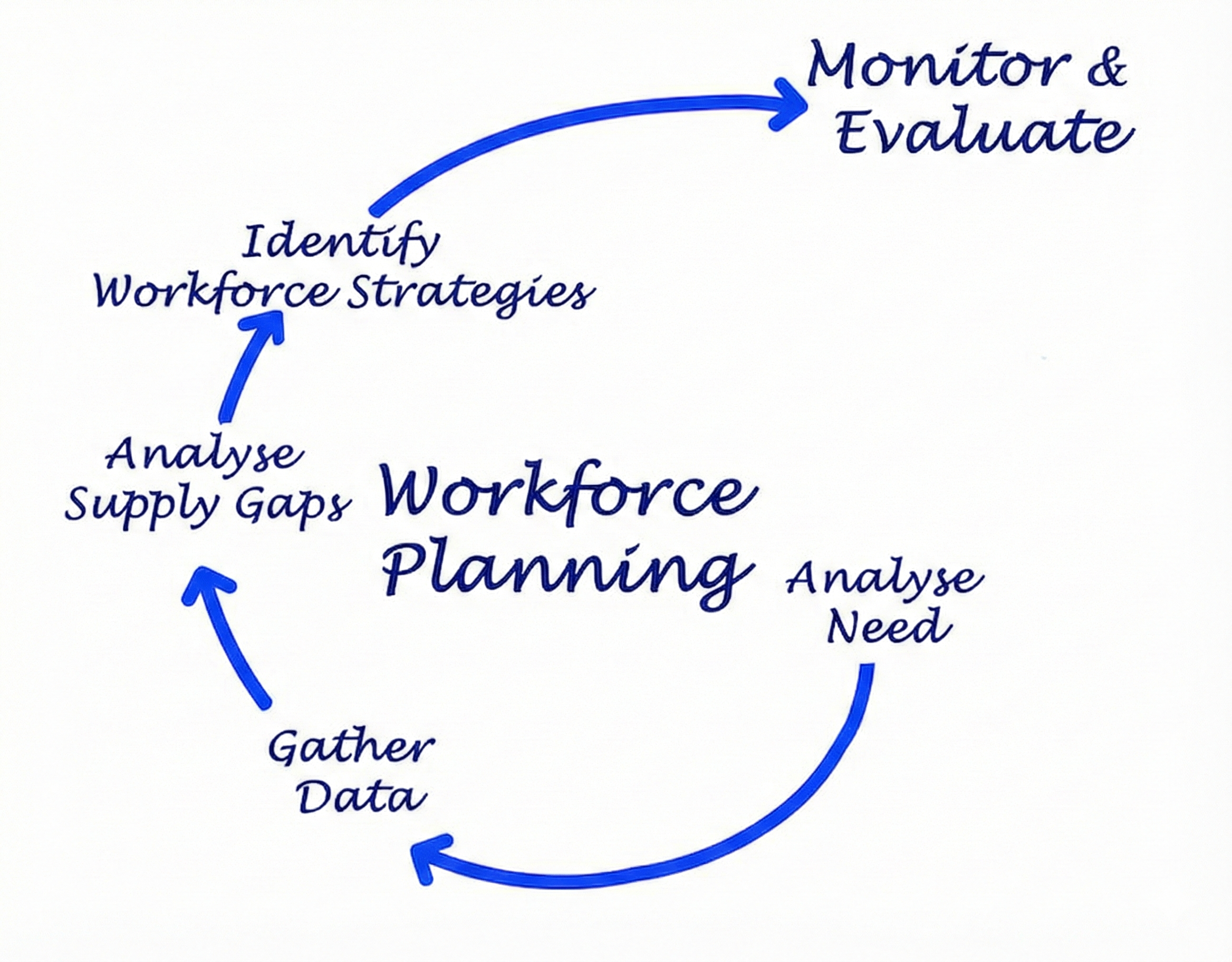
The iFeedback Difference: From Engagement Scores to Organisational Diagnosis
The primary predictor of engagement is management. However, many firms fail because they focus on the "score" rather than the Organisational Diagnosis. At iFeedback, we move beyond surface-level surveys to find the root cause of cultural friction.
Our Holistic Approach
We adapt our research to your specific organisational needs:
Quantitative Benchmarking: We measure your performance against national benchmarks to see how you truly compare to your industry peers.
Qualitative Interrogation: We conduct semi-structured interviews to explore sensitive topics like Meeting Anxiety or Workplace Morale, the "unspeakable" issues that standard surveys miss.
Mixed-methods: We combine the quantitative and qualitative approaches to gather an in-depth understanding of not only the “what” (quantitative) but also the “why” (qualitative).
Targeted Healing Interventions
We understand that every organisation is unique. For instance, in our recent work with Organisation X, we discovered that perceived trust was the cornerstone of their culture, accounting for only 70% of overall engagement. Whereas, Company A’s findings indicated 95% trust in management, making it one of the highest ranked engagement statements.
Our goal is to provide you with more than data; we provide a Roadmap for Recovery . By using regular culture surveys as a barometer, we help you foster an environment of continuous growth, trust, and dignity.
About iFeedback
iFeedback specialises in employee engagement assessments and organisational culture transformation. Our data-driven approach helps organisations identify key challenges and implement tailored solutions for a healthier, more engaged workforce.
For more insights on employee engagement and workplace culture. Book a Diagnostic Consultation at iFeedback.co.za
Note: This case study is anonymised to protect the identity of the organisation involved. The name and the data have been altered.



© 2026 iFeedback. All Rights Reserved.